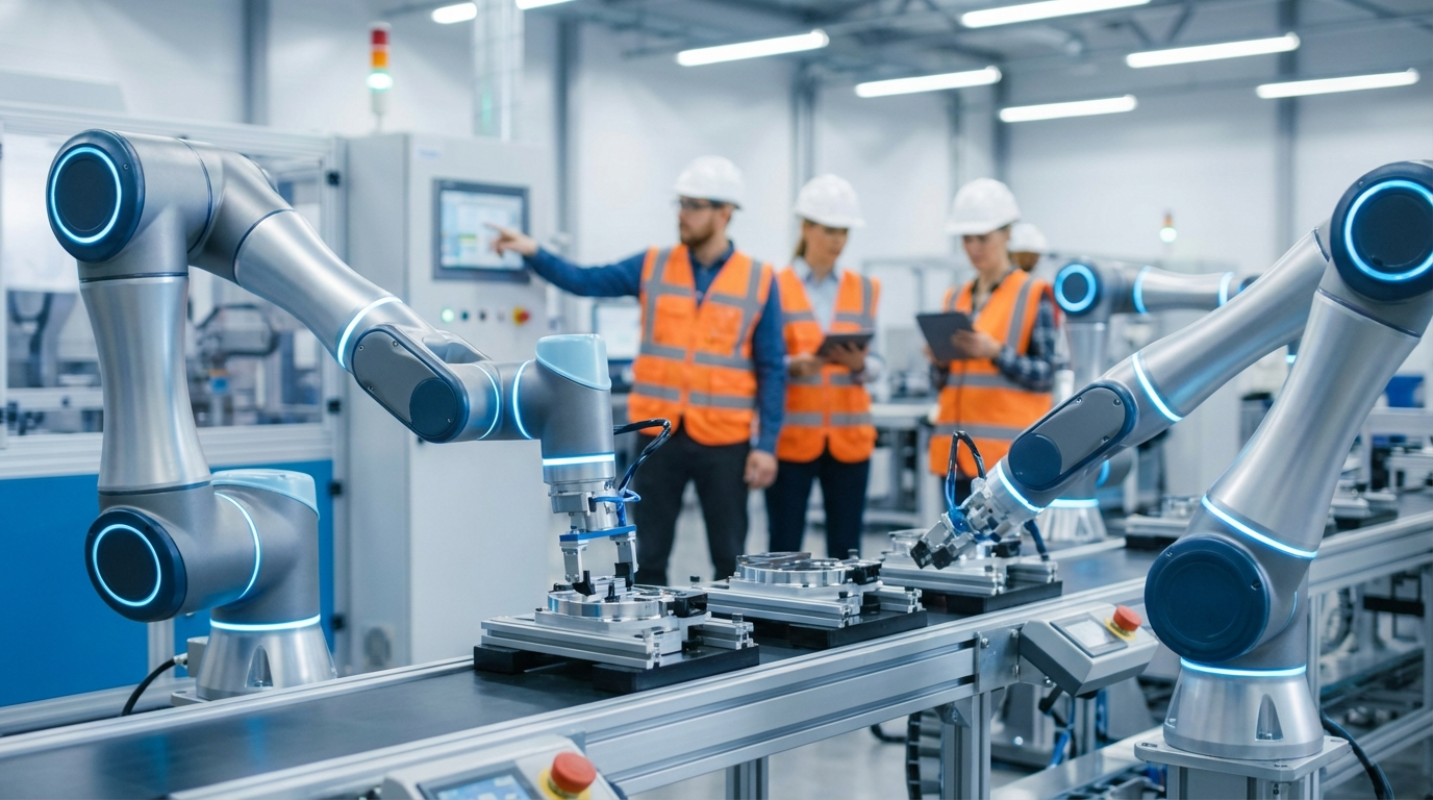
Have you walked through a modern factory lately? If you have, you probably noticed something odd. The hum of machinery is louder than ever, but the parking lot is half-empty. It's a strange sight, right? You'd think that record-high production would mean more people on the clock, but we're seeing the exact opposite.
We've entered an era where manufacturers are divorcing their growth from their headcount. This isn't just a minor shift in how business is done. It's a massive redirection of capital. Money that used to go toward signing bonuses and competitive salaries is now being funneled into robotic arms, AI sensors, and "smart" conveyor belts.
So what does this actually mean for the industry? It means the "help wanted" sign is officially being replaced by a purchase order. In 2025, technology investments jumped to 30% of total operating budgets for manufacturers, a significant climb from just a couple of years ago. The priority has shifted from finding bodies to fill gaps to finding bots that don't leave gaps in the first place.
The Math Behind the Machine Takeover
Why is this happening now? Why not five years ago? It comes down to a simple, brutal math problem.
For years, the "skills gap" was something people talked about at conferences. Now, it’s a crisis that’s hitting the bottom line. When you can't find a reliable welder or a CNC operator, your production lines sit idle. Idle lines don't make money. Manufacturers have realized that waiting for the perfect human candidate is a losing game.
Look at the productivity numbers from last year. Manufacturing productivity shot up by 4.4%, but the actual hours worked by humans only increased by a measly 0.4%. That gap is where the machines live. When production goes up and human hours stay flat, you know exactly who is doing the heavy lifting.
It’s the digital equivalent of trading your horse for a tractor, except this tractor can monitor its own engine heat and predict when it’s going to break down. With unit labor costs rising by 6.4% in early 2025, the ROI on a robot has never looked better. In the past, it might have taken seven years for an automated system to pay for itself. Today, thanks to cheaper hardware and smarter software, that window has shrunk to somewhere between one and three years. For a business owner, that’s an easy "yes."
Beyond the Factory Floor
This trend isn't just about replacing a person with a machine on an assembly line. It's changing the entire way these companies operate. We're seeing a move toward what people call "surgical investment." Instead of throwing money at a general hiring spree, companies are spending specifically on tech that builds resilience.
If a global supply chain hiccup happens, a smart factory can pivot faster. AI-driven systems can reconfigure a line in minutes, something that used to take a team of engineers days of manual labor. This gives early adopters a massive edge. They aren't just faster; they're more flexible.
We're also seeing the rise of "Robotics-as-a-Service" or RaaS. Think of it like a subscription for labor. Instead of spending $2 million upfront, a small shop can "rent" a robot for $10 or $12 an hour. It’s cheaper than a temp agency and the robot never calls in sick or needs a lunch break. This is democratizing automation, letting the little guys compete with the giants like GM or Tesla.
The Human Skill Shift
Now, I know what you’re thinking. Does this mean the human worker is a dinosaur? Not exactly. But the job description is getting a total makeover.
The fear of job replacement is real, but the reality is more about transformation. We are moving from "hiring for growth" to "hiring for control." Companies don't need 50 people to move boxes anymore. They need five people who know how to program the 10 robots that move the boxes.
Take Siemens as an example. Last year, they announced plans to cut about 5,600 jobs from their global automation business.³ On the surface, that looks like a disaster for workers. But if you look closer, they are reinvesting those savings into high-tech R&D and software-driven production. They aren't exiting the business; they're changing the type of people they need to run it.
We’re seeing a desperate need for "Digital Twin Architects" and "IoT Specialists." The 1.9 million manufacturing jobs expected to go unfilled by 2033 aren't for floor sweepers. They’re for technicians who can talk to machines. If you have those skills, you’re more valuable than ever. If you don't, the door is closing fast.
Top Recommendations for Understanding the Automation Shift
If you're running a mid-sized operation or looking to stay relevant in this sector, you can't afford to sit on the sidelines. The "wait and see" approach is the fastest way to become obsolete.
- Start with a Pilot: Don't try to automate the whole building at once. Pick one repetitive, high-error task and solve it with a single robotic cell.
- Invest in Your People: It is cheaper to retrain a loyal employee to manage a robot than it is to find a new "tech" hire in a cutthroat market.
- Look at RaaS Models: If capital is tight, explore leasing options. It turns a massive capital expense into a manageable monthly operating cost.
This article on trimwork.co is for informational and educational purposes only. Readers are encouraged to consult qualified professionals and verify details with official sources before making decisions. This content does not constitute professional advice.